 Born Again Academy
Community Perinatal Doula Training

A Christian Evidence-based Doula Training
If you feel called to doula work, you are probably not looking for inspiration alone. You want to know what to do in the room, what to say when decisions get intense, how to support a mother with confidence, and how to remain helpful whether birth is physiologic, medicated, induced, or surgical. You may also be looking for a training that is Christian in framework (no New Age teachings) and still respects the wide variety of families and birth choices you will serve.
Many doula trainings are built around book reports and a short workshop followed by finding multiple births on your own before you can finish. For some students, that can mean months of waiting to complete certification and stepping into doula work winging it with very little structured training.
This Course is Different.
The Community-based Perinatal Support and Childbirth Education Course provides 80 hours of structured online training over 6 weeks that includes practical field projects designed to build real-world readiness and help you set up a functioning Community Perinatal Doula practice. Yes, you will be all done in 6 weeks! And don't worry, you will not have to do any book reports.

Unlike other trainings that only cover birth doula work or postpartum doula work or childbirth education work, this course prepares you to support families across the whole perinatal season – pregnancy, birth, and postpartum – saving you time, money, and the agonizing process of having to pick only one! Not only that, but you will learn how to teach as well as how to support. This course has been specifically designed around Medicaid-eligibility requirements, so our doulas can begin earning income right away through insurance in select States where we have approval. Learn more about what it means to be a Community Perinatal Doula below.
What is a Community Perinatal Doula?
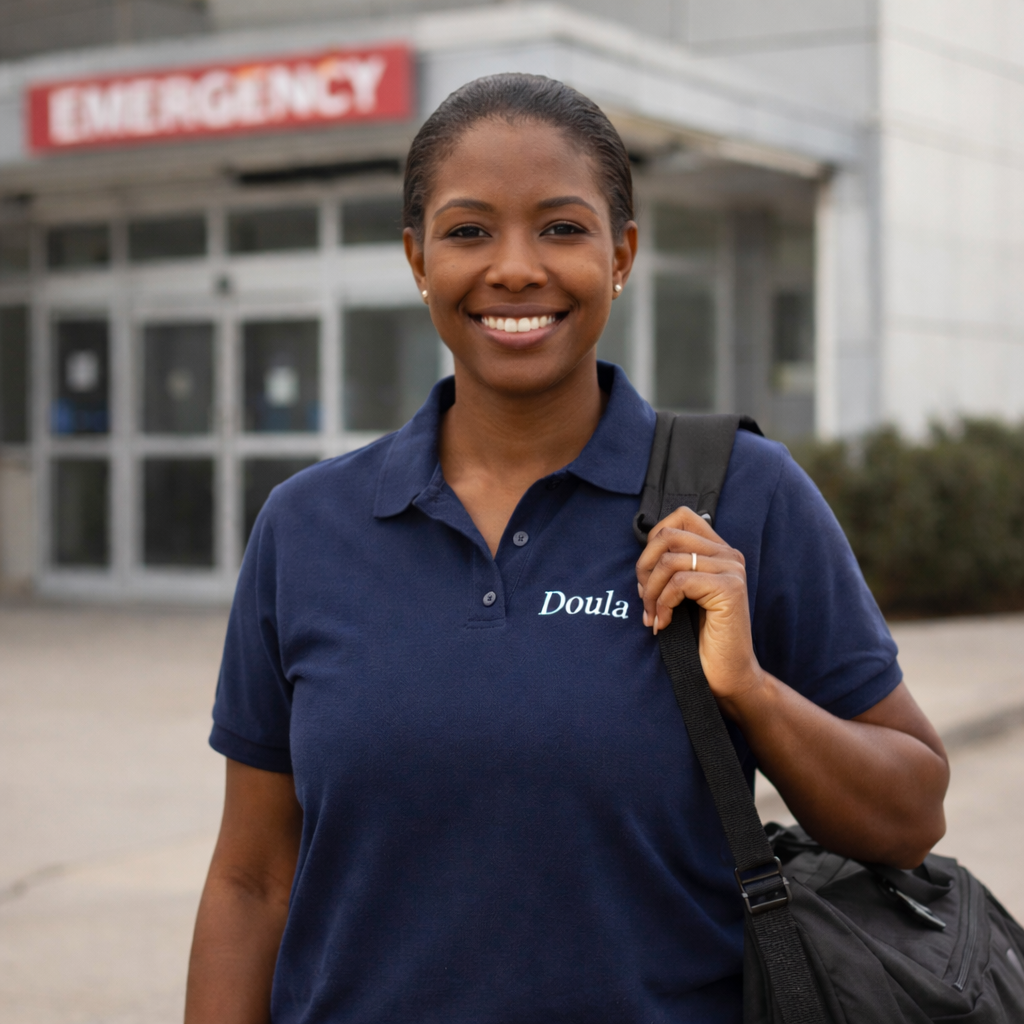
Doula = non-clinical support professional
She supports families through education, emotional support, hands-on comfort measures, communication support, and practical planning, while staying clearly in scope and using a referral-minded posture when concerns exceed the doula role.

Perinatal = pregnancy, birth, postpartum
Perinatal means the full season surrounding birth: active pregnancy support, birth support, and postpartum support. This includes early parenting education and basic lactation education.
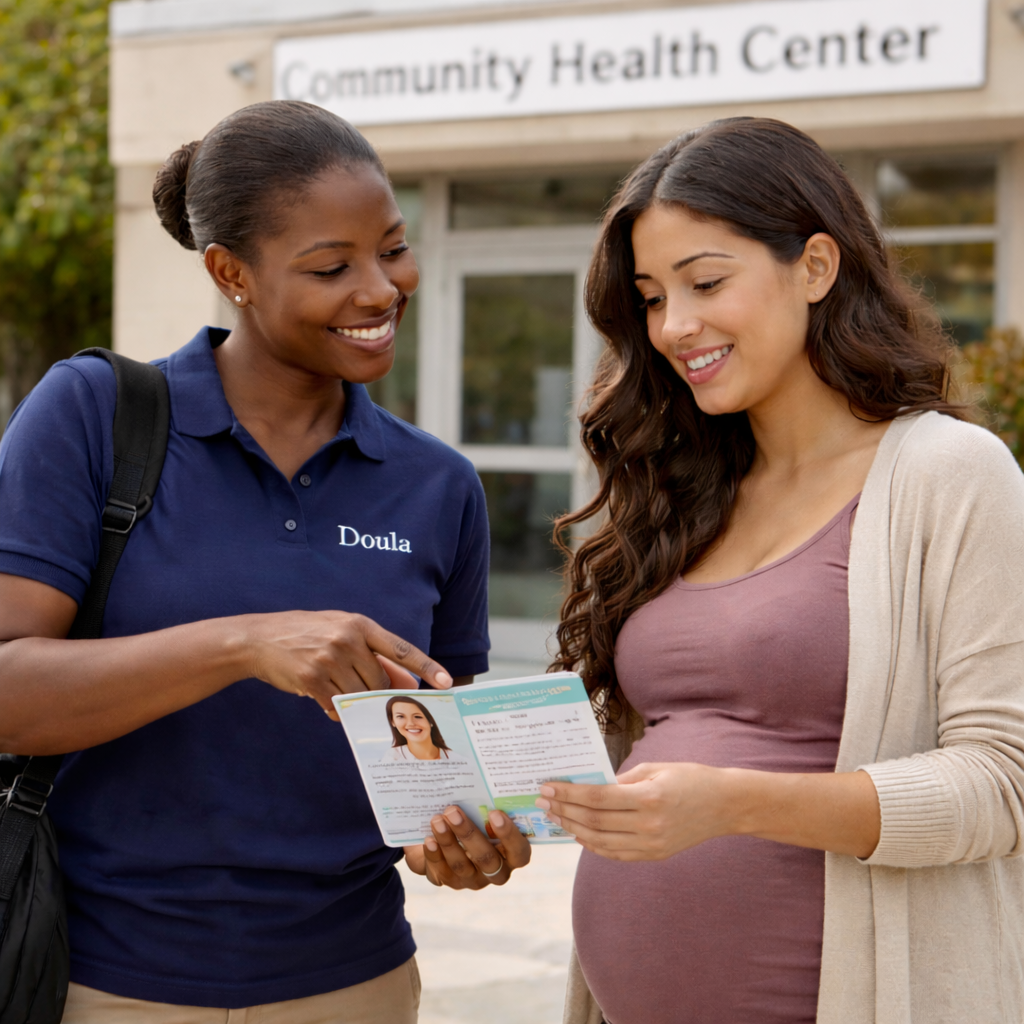
Community = a community health lens
Community means helping families navigate the real-life factors that affect health, continuity of care, and follow-through, including barriers such as transportation, childcare, language gaps, limited support, and system complexity.
In summary, a Community Perinatal Doula is a trained, non-clinical support professional who serves families across the whole perinatal season with steady competence, practical education, and strong community navigation.

What You Can Expect After 6 Weeks
- Confidence supporting pregnancy, birth, and postpartum in one cohesive role
- Practical labor support skills you can repeat under pressure
- A community navigation mindset that helps families overcome real barriers
- Postpartum recovery support and basic lactation education with referral clarity
- A simple professional workflow and a launch-ready practice foundation
Course Outcomes and Learning Objectives (click for details)
By the end of this course, you will be able to:
- Serve confidently across the whole perinatal season: provide active pregnancy support, steady birth support, postpartum support, and basic lactation education in a clear, non-clinical role.
- Support families through real-life barriers: recognize common barriers to care (system complexity, transportation, childcare, language gaps, limited support, and health literacy challenges) and respond with practical, dignity-centered support.
- Navigate resources and strengthen continuity of care: help clients identify and access community supports (WIC, lactation support, home visiting, mental health supports, social services, and local programs), and encourage timely follow-up with OB/midwife and pediatric care.
- Make health information make sense: explain common perinatal terms, procedures, and choices in plain language so families can participate meaningfully in their care and feel confident asking questions.
- Support client rights and respectful care: help clients prepare for appointments, speak up for their needs, request interpretation when needed, and communicate respectfully with the medical team while staying clearly within doula scope.
- Build rapport and provide calm emotional support: show up with confidence, compassion, and a steady presence that helps families feel safe, heard, and supported.
- Support informed choice without pushing an agenda: guide families through decision-making conversations using simple tools and respectful communication that reinforces informed consent and shared decision-making.
- Provide practical labor support skills: offer hands-on comfort measures, positioning for labor progress, and coping support that helps the birthing woman cooperate with the labor process in real time.
- Stay steady through a wide range of birth experiences: support physiologic births as well as epidurals, inductions, and cesarean births with calm presence, role clarity, and family-centered support.
- Support postpartum recovery and the early transition home: teach recovery-centered support priorities, protect rest, and help families plan for practical help and healthy rhythms.
- Teach early parenting basics: support newborn care confidence through education on infant cues, soothing, sleep rhythms, diapering, bathing, and safe sleep practices.
- Provide basic lactation education with referral clarity: educate on breastfeeding basics, pumping and bottle-feeding considerations, and combination feeding with a clear referral posture when needs exceed scope.
- Recognize concerns and escalate appropriately within scope: identify when concerns require timely contact with a licensed provider, IBCLC, mental health supports, or urgent/emergency care, and understand mandated reporting responsibilities.
- Build a simple, professional doula workflow: set up practical systems for intake, scheduling, communication, confidentiality-minded documentation habits, and client outreach so your practice can function.
- Build a launch-ready doula practice: create a practical "business plan snapshot" and publish a simple public website that clearly explains who you serve, what you offer, and how families can contact you, plus a referral-ready flyer or digital card you can share with community partners.

How the Course Works
There are two components to the course:
- Independent study through our online course hub with pre-recorded lectures, assigned reading from the textbook, handouts, quizzes, and video-based instructions for field projects. You can choose the times and days you work through the 50 hours of online coursework.
- LIVE Online Applied Intensive through Zoom where we review the same material through guided discussion of scenarios, demonstration and practice of communication and physical support techniques. This intensive takes place over the course of 4 days (Monday – Thursday), 8 hours a day, for a total of 30 hours of LIVE hands-on training.
In total, you have about 6 weeks to complete both components.
What's Included in the Learning Experience?

LEARN
Through video/live multi-media lectures, textbook reading, handouts, class discussions, and instructor availability

APPLY
Through scenarios and role-play discussions, practical demonstration, and field projects that actually translate into real practice

ASSESS
Through multiple choice quizzes and instructor feedback on field projects
What are field projects?
Field projects give you opportunities to demonstrate the skills you have learned and prepare for your real doula practice, so you can hit the ground running once you are done. Field projects are built into the 6-week course, so there is no question about when you are finished. You will not be left wondering when you will finally "complete" your training. Field projects include creating a childbirth preparation lesson, demonstrating how to properly hold a bottle to support breastfeeding, creating a community resource guide, and more!
Course completion and certification
This course fulfills the main training requirement for certification under Born Again Academy. If you decide to pursue certification, you can review the additional certification requirements on the Certification page.
Tuition and Materials
Many students appreciate that this course is like getting a birth doula training, postpartum training, childbirth education training, community health training, and lactation education training all in one, taught as one cohesive affordable skill set instead of separate expensive programs. Financing through Klarna is available at checkout for eligible students.
Note: If you are interested in this course for satisfying State Medicaid-eligibility requirements, there may be additional BAA programs you have to complete, depending on the State. For example, some students, after course completion, depending on their State requirements, may need to also enroll in the supervised practicum (additional $300) to be evaluated for required birth experience. Also, depending on your State, it may be required to complete BAA initial certification (additional $200) for state doula Medicaid-eligibility. Choose your state below to see exactly what's required and your total.
Every student takes the Community-based Perinatal Support and Childbirth Education Course. States differ in whether they also require certification or a supervised practicum, so your total depends on where you practise.
Materials needed
Tuition includes all course instruction and digital materials provided through the course (video lectures, handouts, worksheets, quizzes, and field project instructions). Students will also need:
- Reliable internet access
- A baby bottle (Dollar Tree)
- A swaddling blanket (Dollar Tree)
- A 17+ inch baby doll or stuffed animal (for practice demonstrations)
- Textbook: Your Pregnancy and Childbirth Month to Month, 7th Edition (ACOG)

Ready to Get Started?
The next 6-week cohorts to complete your training to serve families with confidence, calm, and real skill across pregnancy, birth, and postpartum are scheduled as follows:
October 12 – November 19, 2026
Live virtual intensive: November 16–19, 2026
Register and pay by September 28, 2026
January 25 – March 4, 2027
Live virtual intensive: March 1–4, 2027
Register and pay by January 11, 2027
April 5 – May 13, 2027
Live virtual intensive: May 10–13, 2027
Register and pay by March 22, 2027
June 28 – August 5, 2027
Live virtual intensive: August 2–5, 2027
Register and pay by June 14, 2027
Live intensive sessions run 10 AM – 6 PM Eastern.
All prospective students are highly encouraged to watch the FREE virtual information session and schedule an individualized consultation to get their questions answered and to ensure this program is a right fit for their needs BEFORE enrolling.