 Born Again Academy
Gift of Compassion
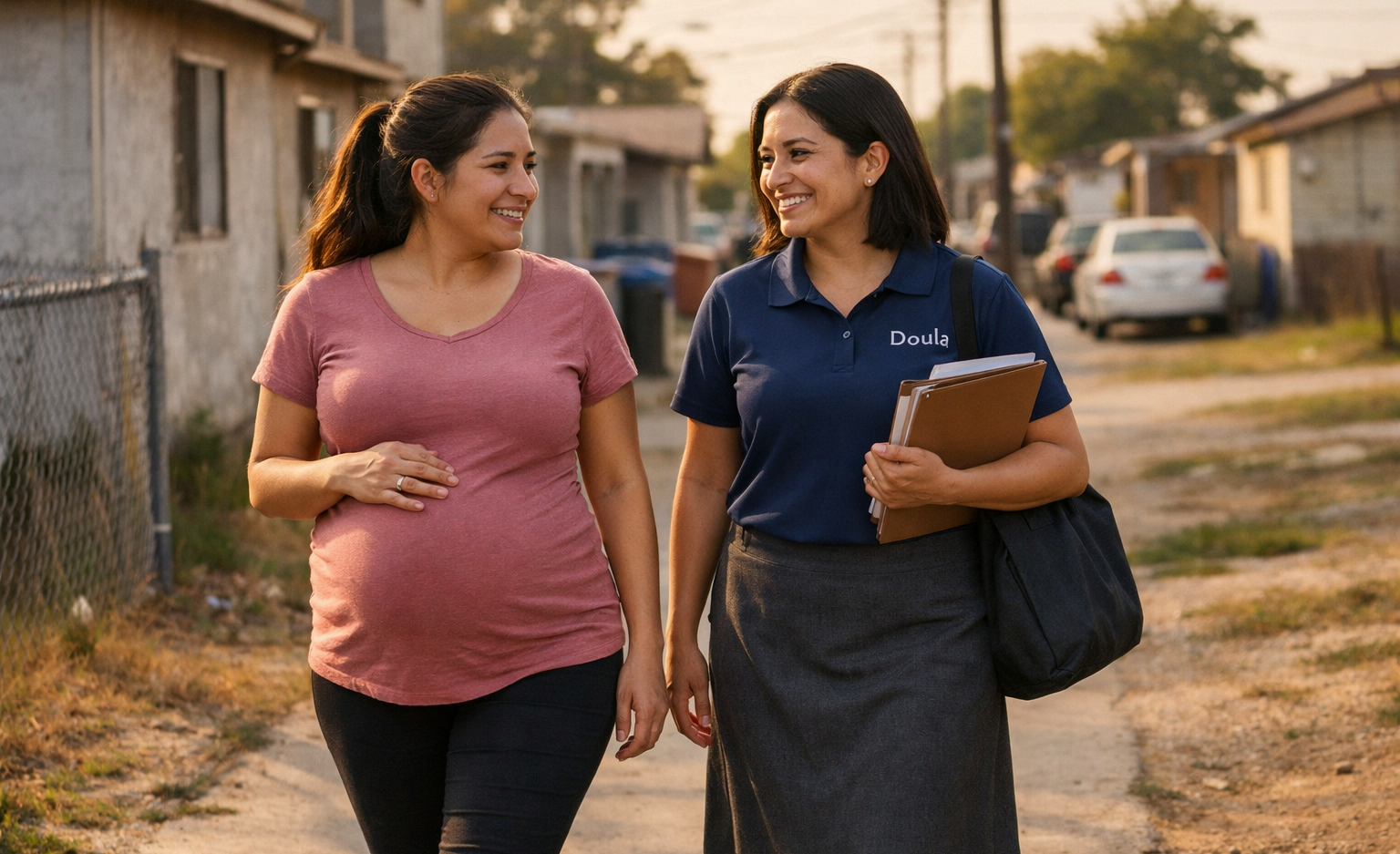
Some people are simply drawn to the work of compassion. They notice the person who is overwhelmed. They care about the mother who has no support. They want to step in when someone is hurting, vulnerable, afraid, or alone. They do not need to be forced into helping work. It is already in them.
But many people who are drawn to this kind of service also know another side of it. They give, they show up, they carry burdens with others, and yet they often do not get paid for the kind of help they naturally provide. Or they find that the kind of work they feel called to do is very difficult to sustain financially over time. If that sounds familiar, you are not alone.
There is a real need that is now being recognized and funded to address it, and states are making a way for it — a special ministry for women to help mothers, families, and babies during their most vulnerable time.
The Need Is Real
Pregnancy, birth, and postpartum can be especially difficult for women and families already facing barriers such as poverty, transportation problems, unstable housing, limited local maternity care, language and cultural barriers, or lack of practical support at home. HRSA has noted that more than one in three U.S. counties are maternity care deserts, and common barriers to prenatal care include transportation, lack of child care, and financial concerns. CMS also notes that Medicaid finances about 41% of all births in the United States, which means Medicaid has an enormous role in the lives of mothers and babies.
The burden is not evenly shared. CDC reports that Black women are about three times more likely to die from a pregnancy-related cause than White women, and CDC has also reported that more than 80% of pregnancy-related deaths in the United States were preventable.
Where Doulas Fit In
A doula is a non-clinical support person who helps a mother and family during pregnancy, labor, birth, and postpartum. Doulas do not replace doctors, midwives, or nurses. They provide steady emotional support, practical encouragement, childbirth education, comfort measures, help with preparing for appointments, help with understanding options, and connection to resources and community support. CMS describes doulas as "birth companions who provide personal, nonmedical support throughout pregnancy, childbirth, and postpartum."
ACOG states that continuous labor support, such as support provided by a doula, is associated with improved outcomes in labor. A major Cochrane review found that continuous support during childbirth was associated with increased spontaneous vaginal birth, shorter labor, and decreased cesarean birth, instrumental vaginal birth, low 5-minute Apgar scores, and negative feelings about childbirth.
Why States Are Paying Attention
States are moving toward paying for doula coverage through Medicaid because the need is serious, the populations affected are often vulnerable, and the evidence increasingly shows that doula care can improve maternal experience and outcomes. As of March 2026, NASHP reports that 26 states and Washington, DC, provide Medicaid reimbursement for doula services, and KFF reports that states continued adding or expanding doula benefits in fiscal years 2025 and 2026.
A More Sustainable Way to Serve
For the right person, this work can be much more than a job. It can become a self-supporting ministry. If you have long felt drawn to helping work, especially among families who need support the most, Medicaid-ready doula work may offer a practical path forward — caring for vulnerable mothers and babies in a way that is financially steadier than unsupported volunteer work alone.
Why Born Again Academy Cares About This
Born Again Academy was built with this burden in mind. We do not want mission-minded people to be left with good intentions but no workable path. We want to help our students gain training that is useful, recognized where possible, and connected to the kinds of state pathways that increasingly matter for real-world service. That is why we talk about being Medicaid-ready. It is not just about paperwork — it is about helping doulas prepare to serve mothers who face real barriers, while also helping the worker build a stable path forward.
Better Births, Better Beginnings
When a mother is supported well, her birth experience can be safer, calmer, and more humane. When a family is guided well in pregnancy and postpartum, babies can have a better beginning. And when compassionate workers can do this in a financially sustainable way, the helping work itself becomes more durable. That is the vision.
If that speaks to the burden you carry, the next pages in this section will help you understand how the state pathway model works and what it takes to become Medicaid-ready.
References
- American College of Obstetricians and Gynecologists. Approaches to Limit Intervention During Labor and Birth.
- Bohren MA, Hofmeyr GJ, Sakala C, Fukuzawa RK, Cuthbert A. Continuous support for women during childbirth. Cochrane Database of Systematic Reviews, 2017.
- Centers for Disease Control and Prevention. Working Together to Reduce Black Maternal Mortality.
- Centers for Disease Control and Prevention. Preventing Pregnancy-Related Deaths.
- Health Resources and Services Administration. Enhancing Maternal Health Initiative Impact Report.
- National Academy for State Health Policy. State Medicaid Approaches to Doula Service Benefits.